
Key Takeaways
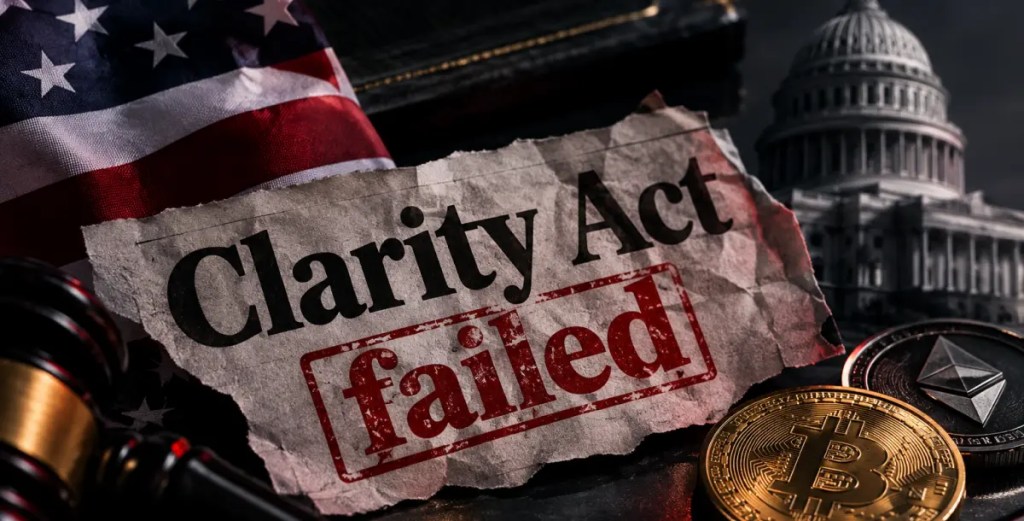
- The Senate’s 49–50 cloture vote on the CLARITY Act paused comprehensive US digital asset market structure legislation, shifting near-term crypto rulemaking entirely to regulatory agencies—a faster path, but one subject to administrative reversal.
- Within 96 hours of the vote, the SEC introduced an Innovation Exemption creating a five-year runway for tokenized public securities trading, while the CFTC issued a developer no-action framework and submitted formal digital asset rulemaking to the White House Office of Information and Regulatory Affairs (OIRA).
- Regulatory durability is not just a portfolio concern—it is a core software engineering challenge. Technical stacks hardcoded to agency exemptions face forced rebuilds if agency priorities pivot in 2029.
- Infrastructure operators can adopt a US-First focus, a Multi-Jurisdictional hedge, or an Infrastructure-Agnostic white-label deployment. For global institutional platforms, modular multi-jurisdictional architecture offers the highest resilience against regulatory resets.
Post-CLARITY US Crypto Market Structure: How Regulators Moved After the Vote
On September 15, 2026, the Senate blocked cloture on the CLARITY Act by a 49-50 vote. Within 96 hours, the SEC had launched its Innovation Exemption for onchain tokenized stocks. The CFTC had issued a no-action position for software developers and filed formal crypto rulemaking with the White House Office of Information and Regulatory Affairs. By September 22, spot Bitcoin ETFs recorded their largest single-day inflow in 11 months ($999 million) and Bitcoin hit $85,000 for the first time since January.
The narrative arc is now well-established across the coverage. Congress deadlocked over Trump’s crypto holdings, not over crypto policy substance. Regulators moved. Markets rallied. Wall Street analysts issued measured warnings about how long any of it will last.
For infrastructure operators, though, the coverage stops one layer too high. The consensus reads durability as an investor problem — will these rules survive to protect my position? The more useful question is architectural: will the infrastructure I’m building now work under a different SEC in 2029?
Why Analysts Say Agency Rules Won’t Last
The durability concern is real, and the analysts calling it out are correct.
The durability concern is well-documented. Multiple sell-side desks flagged within days of the vote that agency rules are inherently less durable than legislation because they can be reversed by a future commission or challenged in court. The consensus view is that CLARITY would have provided a legislative shield that agency rulemaking alone cannot replicate, and that without it, the industry faces a realistic scenario where a future administration rolls back the current permissive framework entirely — a repeat of the enforcement-heavy approach that defined the previous SEC regime.
The point isn’t hypothetical. The current administration’s own regulatory strategy has been to reverse dozens of Biden-era SEC and consumer protection policies through the same notice-and-comment process that authorized them. That capability runs in both directions. What Trump-era regulators build can be dismantled by their successors the same way. The Supreme Court’s 2024 Loper Bright decision ended judicial deference to agency interpretations, adding a court challenge layer on top.
SEC Chair Paul Atkins himself acknowledged the limit in August. Legislation, he said, is “indispensable” to creating rules “durable enough to withstand future leadership changes.” His September 17 Innovation Exemption was explicitly framed as a “temporary bridge toward permanent rulemaking.”
Every rule shipped in this cycle is on the clock. Either Congress converts it to statute, or a future commission reverses it. Both outcomes are on the table.
Digital Asset Infrastructure Strategy: Durability Is an Architecture Problem, Not an Investor Problem
The durability problem is being covered as a risk for holders and investors — will my position survive the next regime change? That’s the natural framing when the coverage is written for hedge funds, ETF flow trackers, and retail readers.
For operators building infrastructure, the framing is different. The durability risk is an architecture problem, not a position problem. An investor can rebalance if the rules change. An operator who built a US-only exchange stack around SEC exemptions can’t rewrite three years of engineering in six months when a new commission unwinds them.
That distinction matters because the answer to the durability problem is architectural: how you design your compliance layer, which jurisdictions your infrastructure serves, and how easily you can pivot when a specific US framework becomes unstable. The right architecture treats the durability risk not as a problem to solve but as a variable to plan around.

Three Crypto Tech Stack Architecture Bets, Ranked by Durability
There are effectively three architectural responses to the current regulatory environment. Each trades reward against reversal risk differently, and each is the right answer for a different kind of operator.
The US-First Bet: Highest Reward, Highest Reversal Exposure
The current US regulatory window gives operators three new paths to market. The SEC’s Innovation Exemption lets tokenized securities venues trade onchain without registering as national exchanges. The CFTC’s no-action framework lets software developers build trading pipelines without triggering broker registration. And the coming CFTC crypto asset market designation could let non-registrant exchanges operate under a formal regulatory category for the first time.
All three put operators in front of the deepest capital market in the world at a moment when institutional flow is peaking — nearly $1 billion moved into spot Bitcoin ETFs on September 22 alone.
The risk is straightforward. Every one of those paths is an agency rule, not legislation. If a future commission rescinds the Innovation Exemption or a court strikes down the crypto asset market designation, an operator whose entire stack was built around those frameworks has nowhere to fall back to. The architecture is the exposure.
This bet makes sense for operators whose competitive edge depends on being first in the US market — established brokerages adding digital assets, or tokenization platforms racing to build during the exemption window. It does not make sense as a default architecture for infrastructure that needs to survive more than one administration.
The implication is concrete. An operator who builds their entire exchange stack, custody model, and compliance layer around these US-specific frameworks is making a bet that the current commission stays in place — or that Congress converts these rules into statute — before the next administration takes over. If neither happens, that operator faces a forced rebuild: re-architecting for a different jurisdiction, re-licensing under a different regime, and absorbing the cost of infrastructure that was purpose-built for rules that no longer exist. That is not a market risk you can hedge with a rebalance. It is an engineering cost measured in years and headcount.
The Multi-Jurisdictional Hedge: Moderate Reward, Distributed Risk
Instead of building around one country’s rules, this architecture spreads compliance across multiple jurisdictions — MiCA in the EU, MAS in Singapore, the FSC framework in Korea, and adaptive US positioning. If the rules change in any one market, the others keep the platform running.
Some operators already have this by default. A MiCA CASP-licensed exchange can passport across 27 EU member states under a legislative framework that does not depend on any single regulator’s continuity. Adding MAS licensing in Singapore covers a growing Asian institutional market. US positioning through a CFTC-designated market or an SEC-exempt tokenized securities venue then becomes one revenue channel among several, not the foundation the whole stack depends on.
The tradeoff is speed. Multi-jurisdictional operators cannot move as fast on any single market opportunity because they are building compliance across multiple regimes simultaneously. But the reversal exposure is bounded. A Gensler 2.0 SEC in 2029 does not dismantle a European CASP license or a Singapore MAS registration.
The implication: if US rules reverse, a multi-jurisdictional operator loses one market channel and keeps operating. Revenue takes a hit, but the platform, the team, and the compliance infrastructure all survive intact. There is no forced rebuild. For most infrastructure operators serving global institutional clients, this is the correct default — not because the US opportunity is not worth pursuing, but because no single jurisdiction’s regulatory cycle should be able to shut the business down.
Infrastructure-Agnostic White Label: Lowest Reversal Exposure
The third approach removes the operator from the regulatory bet entirely. Instead of licensing directly under any one jurisdiction’s framework, the operator uses whitelabel infrastructure — exchange, custody, KYT, and settlement built as configurable modules — and lets each client hold the regulatory license for their own market. The infrastructure adapts to whichever ruleset the client is licensed under.
This is not a hedge against the current US administration. It is a hedge against every administration, in every jurisdiction.
The tradeoff is margin. The operator does not capture the full upside of running directly under a favorable US framework because they are providing the infrastructure layer, not operating the exchange themselves. But the reversal exposure is the smallest of the three approaches because the infrastructure itself never took a position on which regulatory regime would last.
The implication: when rules change — in the US, in Europe, or anywhere else — the infrastructure provider’s clients absorb the regulatory adjustment, not the provider. The provider re-configures modules to match the new ruleset rather than re-architecting the platform. For infrastructure providers, tokenization platforms serving multiple issuer types, and operators whose product roadmap needs to outlast any single political cycle, this is the approach that assumes the least about which jurisdiction wins — and loses the least when the answer changes.
Tokenized Securities & RWAs: How the SEC Innovation Exemption Changes the Market
The SEC’s Innovation Exemption is a genuinely bigger event than most operator conversations have registered. Launched under Chair Paul Atkins’ Project Crypto initiative, the exemption is a targeted regulatory sandbox that lets qualified platforms offer tokenized versions of publicly listed US equities without completing full SEC registration or obtaining a national exchange license. In practice, this means crypto-native platforms and DeFi protocols can list tokenized stocks for 24/7 fractional trading on public blockchains through permissioned automated market makers — with guardrails including exposure limits, investor participation caps, mandatory disclosures, and regular reporting to the SEC. These are real National Market System securities with voting rights and dividends, not offshore synthetic trackers. The exemption runs five years, takes effect immediately, and the SEC retains the power to revoke it at any point if investor harm emerges.
The market reaction confirmed the scale of the shift. Major asset managers recognized the exemption as the first real path for liquid tokenized securities markets to develop onshore in the US. Every major Automated Market Maker (AMM) in DeFi is now positioned to launch a tokenized securities venue candidate, and Robinhood shares moved 2.8% on the news.
For tokenization operators, the window is straightforward: build the compliance layer, custody model, and secondary market integration during the exemption’s five-year runway. If Congress converts the exemption into permanent rulemaking, the infrastructure built now becomes the platform for the permanent framework. If the exemption gets rescinded, operators built on multi-jurisdictional architecture still have the EU Distributed Ledger Technology Pilot Regime and MAS’s Guardian program as institutional-grade fallbacks.
What isn’t defensible is building infrastructure that only works if the Innovation Exemption survives. That’s a five-year bet on a specific commission’s continuity, and the commission itself has acknowledged that legislation is what would make it durable.
What the CFTC No-Action Means for DeFi Tooling Operators
The CFTC’s September 17 developer no-action is being covered as procedural relief. It is more than that at the infrastructure layer.
A no-action letter is a formal statement from a regulator that it will not pursue enforcement against a specific activity, provided the operator meets certain conditions. It is not a law or a rule — it is a commitment not to act, which means it can be withdrawn by a future commission without going through a legislative process. In this case, the CFTC extended what was previously a single-company exemption into a broader framework for any software provider that acts as a pipeline to designated contract markets, provided certain disclosures and compliance policies are in place. The industry consensus is that this is significant because it turns company-specific relief into a category that other builders can design around.
For DeFi tooling operators, this changes the operational calculus. Non-custodial software that connects users to regulated derivatives markets is now viable under a defined framework rather than an ambiguous one. The compliance investment required to operate under the framework is real, but the framework itself creates a category that did not previously exist at scale in the US.
The same durability caveat applies. The no-action can be withdrawn by a future commission without notice, because it was never a rule in the first place. However, the tooling built during this window either becomes the reference implementation when permanent rulemaking cements the framework, or shifts to jurisdictions with similar developer protections. Neither outcome is a total loss for infrastructure built now.
Crypto Legislation Forecast: Can CLARITY Still Pass This Session?
The vote failed 49-50, but the bill is not dead procedurally. One senator who voted against cloture did so specifically to file a motion to reconsider, which keeps the bill on the Senate calendar rather than sending it back to committee. The closest recent precedent is the GENIUS Act stablecoin bill, which failed its first cloture vote before passing 11 days later. Senate leadership can file cloture again on CLARITY after the required intervening days.
However, the procedure is not the constraint. The 2026 election calendar is. Legislative days are shrinking as members shift to campaigning, and a Democratic gain in the 2027 midterms would likely mean the bill gets redrafted from scratch under different priorities. The window for CLARITY to pass in something close to its current form is narrow — but not zero.
For operators, this changes the timeline but not the fundamental architecture decision. If CLARITY passes in Q4, the multi-jurisdictional operators are still well positioned and the US-first operators just got their rules converted into durable legislation. If CLARITY does not pass this session, the three architecture bets stand as described.
The scenario every operator should be stress-testing against is a 2028 Democratic administration inheriting agency rules built under a permissive commission. Every architecture decision made in the next 18 months should be evaluated against that possibility — not because it is certain, but because the reversal cost is large enough that it has to be planned for.
Institutional Stress-Testing: Would Your Architecture Survive a Gensler 2.0 SEC?
Every operator building on US regulatory ground right now should be stress-testing one scenario: a Gensler 2.0 SEC takes over in January 2029.
The 2028 election is 26 months away. A Democratic administration would inherit every agency rule the current commission has shipped and would have the same notice-and-comment power to reverse them. The Loper Bright decision means courts won’t defer to agency interpretations either. The reversal path is open from both directions.
Run it against your stack. If the Innovation Exemption is rescinded, does your tokenization product still have a market? If the CFTC no-action is withdrawn, does your DeFi tooling still have a legal basis? If the crypto asset market designation is struck down, does your exchange have a fallback licensing path? Any component where the answer is “we rebuild” is a component where you are carrying unpriced risk.
The operators who built under Gensler learned this the expensive way — years of enforcement actions, stalled roadmaps, and runway burned on legal fees instead of product. Building for the current cycle assuming permanence sets up the same outcome in reverse, at higher cost, because today’s infrastructure is more complex and more expensive to unwind.
The solution is the same one this article has described in every section: multi-jurisdictional licensing so no single regime can shut you down, modular compliance so you can reconfigure rather than rebuild, and infrastructure-agnostic deployment so the regulatory bet sits with the client, not the platform. Operators who have all three keep shipping product regardless of who runs the SEC. Operators who don’t are betting their architecture on an election outcome.
How Operators Are Building for Regulatory Durability Now
The architecture decision this article describes is not theoretical. Operators are making it right now, and the ones moving fastest are building against the reversal scenario rather than hoping it does not arrive.
The operators choosing multi-jurisdictional architecture are filing MiCA CASP applications and MAS licensing in parallel with US positioning — so that no single jurisdiction’s reversal can shut them down. The operators building on the Innovation Exemption are treating the five-year window as a countdown, not a guarantee, and layering in EU DLT Pilot Regime and MAS Guardian fallbacks from day one. The DeFi tooling builders qualifying under the CFTC no-action are building disclosure and compliance layers into the product now, while the framework is permissive, so they become the reference implementation rather than the ones scrambling to retrofit. And the infrastructure-agnostic operators are stress-testing their stacks against the Gensler 2.0 scenario — asking whether every module can be reconfigured for a different jurisdiction without custom engineering.
The common thread across all of them is modularity. Exchange, custody, KYT, and settlement layers that can be configured per-client and per-jurisdiction without a rebuild. That is what ChainUp’s white label infrastructure is built to do — not to bet on which regulatory regime lasts, but to make the bet survivable regardless of the outcome.
If your team is running the same calculus — where to build, which licensing path to prioritize, how to architect around rules that could reverse in 2029 — reach out to the ChainUp team. The window is open. The clock is running.